


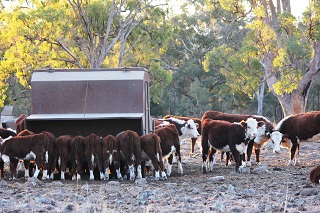
 Georgie Oakes – Northern Tablelands Local Land Services Pasture Agronomist - talks about protecting your pastures during dry times by 'sacrificing' certain paddocks.
The main objectives through these tough seasonal conditions should be your own well-being, the welfare of livestock, the maintenance of the farm business and the productive resources of the farm – soil, capital and the genetic merit of your livestock.
Managing through this season could call for some out-of-the-ordinary stock and farm management options like the use of sacrifice paddocks or confined paddock feeding.
A sacrifice paddock is an area that can be intensively stocked for feeding purposes.
Feeding in sacrifice paddocks has a number of advantages. It will allow you to observe stock more closely as alternative feeds are introduced, it prevents stock from walking off condition, contains the spread of weed seeds from outsourced fodder and saves the farm’s pasture resource for spring growth.
Consider using one or more paddocks or temporarily fencing off parts of paddocks for use as ‘feeding out’ areas. Suitable paddocks are those:
• where the pasture is degraded and due for resowing or cropping;
• with a predominance of annual species and good soil seed reserves;
• that have access for feeding operations even after it rains and are well drained; and
• that are not too steep to cause excessive run-off after rain.
Try to avoid using valuable pasture paddocks as feeding out areas. Paddocks that have significant cover of perennial pasture plants (especially if the cover consists of native perennial grass species) should be avoided.
With high stock numbers plenty of good quality water will need to be provided. Dams may need to be fenced off and the water piped into troughs to avoid stock bogging or fouling this increasingly precious resource.
The other benchmark to keep in mind is ground cover. Too little and soil erosion can be a problem when it rains. The suitable level depends on slope, likely rainfall intensity and soil type, but as a guide for the Tablelands, 85 – 90%, on the Slopes 70 – 80% would be appropriate. By maintaining adequate groundcover, weed invasion after drought will be reduced.
For further information on sacrifice paddocks or other pasture enquiries please contact Northern Tablelands Local Land Services Pastures Agronomist, Georgie Oakes on 0429 310 264.