


Cane toads conti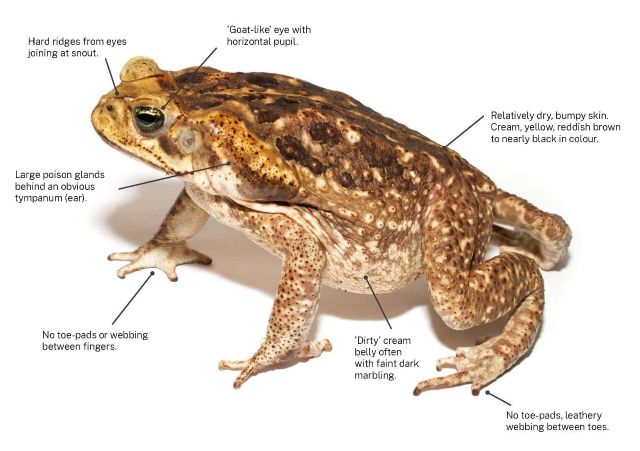 nue to spread through parts of northern New South Wales, with populations becoming established further inland than previously expected. While cane toads are not currently established around Armidale, landholders and community members across the Northern Tablelands have an important role to play in helping prevent their spread.
For many years, cold winters were considered a natural barrier to cane toad establishment on the Northern Tablelands. However, recent observations in northern NSW, along with international research, suggest cane toads can survive and persist in cooler climates than previously recognised. This has increased the importance of community awareness and surveillance across the region.
Cane toads pose significant risks to agriculture, native wildlife and cultural values. They can reduce dung beetle populations, poison native predators such as quolls and goannas, and impact culturally significant species and waterways. Pets are also at risk, with cane toad toxin capable of causing severe illness and, in some cases, death.
Despite these concerns, there is reason for optimism. Cooler conditions in northern NSW appear to slow cane toad spread, providing a valuable opportunity for coordinated management. Additionally, control activities in cooler temperatures have been shown to have more significant impacts than in northern populations. Researchers and land managers are also exploring new detection and control technologies, some of which will be available within the next five years, to further improve our ability to respond to emerging populations.
Community reporting remains one of the most effective tools available. Landholders are often the first people to notice unusual wildlife on their properties, making them a critical part of the region's biosecurity network. Early detection can help authorities respond quickly, target control efforts and prevent new populations from becoming established.
Cane toads are typically identified by their dry, warty skin, broad squat body and large poison glands behind their eyes. If you suspect you have found a cane toad, do not harm the animal. Instead, safely contain it if possible, take clear photographs, record the location and report the sighting through the FeralScan app or at feralscan.org.au. Reports are assessed by specialists who can confirm identification and provide advice on next steps.
The Department of Primary Industries and Regional Development (DPIRD) leads cane toad management in NSW, working closely with Local Land Services, Landcare groups, contractors and local communities. By staying alert and reporting suspected sightings, Northern Tablelands residents can help protect the region's farms, native wildlife and waterways from future cane toad impacts.
For further information: invasive.species@dpird.nsw.gov.au
Image: Identifying features of a cane toad. Courtesy of Brian Gratwicke.
Article provided by Emily Hegarty, Advisory and Extension Officer, Northern Tablelands Local Land Services