

 More than 50 people head to Uralla's Racecourse Lagoon for a day of botany, biosecurity, bugs and birds
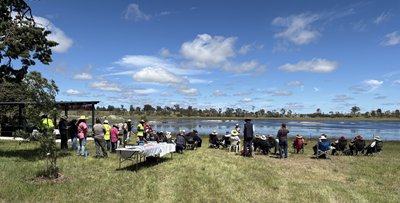
More than 50 people came to Racecourse Lagoon in Uralla on Tuesday 17 November to learn why wetlands matter and to see the restoration work underway at one of the region's most significant natural assets.
Uralla Shire Council hosted the Botany, Biosecurity, Bugs & Birds field day with Northern Tablelands Local Land Services and Southern New England Landcare Ltd.
In the sunshine, landholders, community groups, birdwatchers, families and students heard from local experts in the morning, then put what they had learned into practice in guided field sessions alongside the lagoon in the afternoon.
"It was fantastic to see so many people at the lagoon learning about the plants, birds and insects that call it home," Dr Arah said.
"Events like this build community understanding of our unique local environment and of the work everyone is doing together to protect and restore it for future generations."
The day opened with a Welcome to Country from Aunty Pam, Anaiwan Elder from Uralla. Anya Salmon, Senior Land Services Officer with Northern Tablelands Local Land Services, then introduced the Australian Government's Natural Heritage Trust Highland Wetlands project. Isaac Arah, Uralla Shire Council's Manager Environment and Waste, outlined the background, partners and activities of the NSW Environmental Trust's Conservation and Ecological Restoration of Racecourse Lagoon project.
Highlights of the day
- Why wetlands matter: Professor John Hunter explained what wetlands do and why we need them. He also covered the main types of wetland, from lagoons and swamps to fens and peatland bogs, and introduced a wetland plants identification booklet.
- Bird flu preparedness: Andrew Scott from Uralla Shire Council gave an update on the threat of H5 bird flu. He explained what to do if you see a mass bird death, which hotline to call, and shared everyday biosecurity tips.
- Weed threats: Neal Fenner from Council covered the common weeds at the lagoon and across the wider region, and where landholders can go for help.
- Cane toads: Emily Hegarty from Northern Tablelands Local Land Services gave the latest on cane toads, along with resources to help people tell toads apart from native frogs.
- Beneficial bugs: Ecologist Manu Saunders showed the variety of insects that live in wetland habitats and the vital jobs they do.
- Wetland and woodland birds: Ornithologist Steve Debus spoke about the wetland and woodland birds of the area and the NTLLS Birds of Prey project.
- Hands-on field sessions: After lunch, participants rotated through guided plant, bird and bug identification with the morning's experts. They also walked a way along the lagoon's perimeter to see the revegetation work Uralla Shire Council has carried out.
The organisers thank the presenters, volunteers and everyone who attended for making the day so enjoyable and informative.
This event was funded by the Australian Government Natural Heritage Trust, delivered by Northern Tablelands Local Land Services, a member of the Commonwealth Regional Delivery Partners panel, and also supported by the NSW Environmental Trust's Conservation and Ecological Restoration of Racecourse Lagoon project, delivered by Uralla Shire Council, with support from Southern New England Landcare Ltd under the NSW Landcare Enabling Program, a collaboration of Local Land Services and Landcare NSW supported by the NSW Government.