


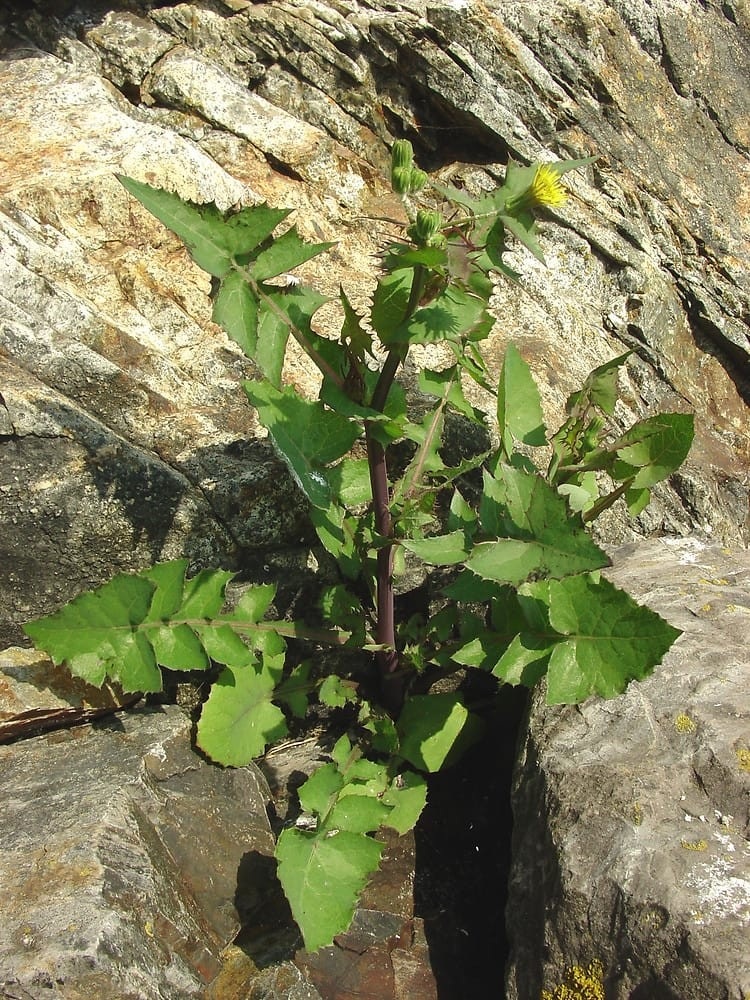
 Common Names: Common Sowthistle, Sow Thistle, Smooth Sow Thistle, Milk Thistle, Milky Tassel, Soft Thistle, Hare's Colwort, Hare's Thistle
Scientific Name: Sonchus oleraceus
Where in the Succession: Late succession accumulator
Milk Thistle is a fast-growing annual herb that can reach up to 1 metre in height. Recognisable by its hollow stems, milky sap, and yellow dandelion-like flowers, it is one of the world's most widely distributed plants, found on every continent except Antarctica. Although often considered a weed, Milk Thistle can play an important role in healthy pasture systems.
What Does Milk Thistle Tell Us About the Landscape?
Milk Thistle is often associated with fertile soils and disturbed environments. Its presence may indicate:
- Recent disturbance such as cultivation, fire, chemical fallow, or overgrazing.
- High levels of available nitrogen.
- Productive soils capable of supporting vigorous plant growth.
- Pastures that would benefit from increased plant diversity and ground cover.
As a late-succession accumulator species, Milk Thistle can help cycle nutrients and contribute to landscape recovery when managed appropriately.
Managing Milk Thistle
Rather than relying solely on eradication, Milk Thistle can be managed through improved pasture practices:
- Use livestock grazing: Well-timed, high-density grazing can reduce dominance and encourage greater pasture diversity.
- Minimise disturbance: Reducing cultivation, overgrazing, and bare ground limits opportunities for Milk Thistle to establish.
- Increase ground cover: Diverse, resilient pastures naturally suppress excessive Milk Thistle growth.
- Build soil organic matter: Improved soil health helps balance nutrient levels and strengthens competition from desirable pasture species.
Benefits of Milk Thistle
For Livestock Milk Thistle is highly palatable and readily grazed by livestock. It provides valuable minerals, quality protein, and healthy fats.
As a Soil Indicator Its presence may suggest soils with low calcium and phosphate levels, elevated potassium and magnesium, and good drainage.
Medicinal Uses Traditionally, Milk Thistle has been valued for supporting liver health and reducing inflammation. It continues to be widely used as a herbal medicine due to its antioxidant and protective properties.
For Human Consumption Young leaves and stems can be eaten raw or cooked. They have a mild flavour with slight bitterness and are rich in vitamin C, vitamins, and minerals.
Milk Thistle is often viewed as more than a weed. When understood in context, it can provide valuable insights into soil conditions, support livestock nutrition, and contribute to greater pasture diversity and resilience.
Original article credit to Tarwyn Park Training. Sign up to their newsletter here.