


 During the drought of the last couple of years, water quality was a topic high on the list of enquiries made to the Northern Tablelands Local Land Services team.
Many farmers asked about the impacts of livestock on water quality, the impacts of water quality on livestock, how to interpret water tests, how to manage livestock around riparian zones and more.
 Researchers for
  Each year, Southern New England Landcare's Coordinators recognise a member who provides significant assistance or support with the "Coordinator's Choice" Landcarer of the Year Award.
 The 2020 John Winter-Irving Bequest, made each year by the Winter-Irving family in memory of John, has been awarded to long-time Southern New England Landcare member Ray South.
 Southern New England Landcare welcomes back to the team, Des Andersen who has recently been appointed as the dedicated Koala Conservation Officer for the Southern New England region.
 Southern New England Landcare is pleased to welcome Alex Hunter to the team as the new Administrative Assistant in the office in Beardy Street Armidale.
 Southern New England Landcare is hosting an introduction to Natural Sequence Farming with Stuart Andrews (Tarwyn Park Training), October 22nd 2020 at Balala Station near Uralla.
 There's only 1 week to go until the Aussie Backyard Bird Count begins — have you registered yet?
 Landholders are invited to attend a two-day boot camp on September 16-17 with sought-after presenter, David Hardwick.
 Local Landcare member was telling us about his orchids at a recent meeting and agreed to share their beauty with us all in these lovely photos he sent in.
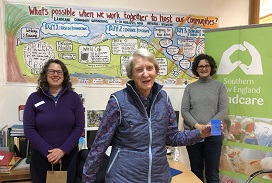 Southern New England Landcare congratulates Elwyn Hegarty of Armidale as the winner of our 2020 Member Survey $100 voucher draw!
 $1 million worth of projects funded in the Armidale and Guyra region
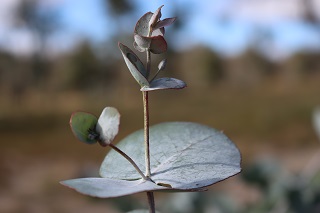 A small team of researchers, land managers and practitioners at the University of New England and Northern Tablelands Local Land Services are embarking on an environmental project to protect and restore two locally endangered woodlands here in the heart of the New England.
 Angophora Bushland Reserve, at the junction of Bona Vista Road and Burgess Street in south Armidale, is a precious piece of bushland remaining within the town boundaries. It is small, only 1.35 ha but enough for large native trees to grow, mature, and shed branches. This is when most eucalypts develop hollows.
 BirdLife Australia regret to inform that the August round of the biannual surveys for Swift Parrots and Regent Honeyeaters has been cancelled. The official survey period was scheduled to occur from 25 July to 9 August 2020.
 We're COVIDSafe, but we'd like to request that visitors to our office make an appointment , so we can ensure we maintain physical distancing in our small office space. We have a limit of 1 visitor in our reception area at any one time, so if you arrive and see someone already there, please knock and wait outside, or call us on 6772 9123 to make an appointment. You can
  The start of the new financial year marks a fresh milestone in a 25 year partnership between Southern New England Landcare and Armidale Regional Council.